Examples of writing
Data science is experiencing a boom. Data scientists are in high demand but in short supply. The processes for hiring and onboarding new data scientists are too expensive and time-consuming. Companies are looking for other solutions to solve this challenge for data science.
Many private and public universities are investing in data science degrees and programs to keep up with this demand. With a need for data science across all industries—technology, healthcare, government—universities prioritize interdisciplinary programs. Many of these programs are designed to emphasize reshaping the skills needed in the workforce today. Data analytics, visualization, machine learning, and automation are in-demand skills, regardless of industry.
As universities expand their offerings, they may need to incorporate data analytics into their operations. For example, higher education leaders understand the importance of analyzing student enrollment data or degree completion rates. However, they may face specific challenges in implementing a data-driven approach. For any organization to become data-driven, it’s critical that top leadership champions the cause and prioritizes tangible results over hunches.
Many higher education institutions silo analytics capabilities into one department, and there is little incentive or process for sharing data across departments and university functions. For example, the alumni relations department has different needs and priorities than the institutional research team, and thus each group uses its own data sets and prioritizes its analytical needs.
Another challenge colleges and universities face in their data-driven transformation are connecting the various legacy software systems and databases. As Mckinsey notes, “Even with the help of a software platform vendor, the lead time to install, train, and win buy-in for these technical changes can take time, perhaps two to three years, before institutions see tangible outcomes from their analytics programs.”
As higher education institutions increase their data analytics capabilities, senior leadership must go beyond data champions. Instead, they must reiterate the benefits for the university as a whole, highlighting the improvements to the student journey, new research opportunities, and the ability to build a financially secure institution. Establishing a centralized data analytics department that defines standards for capturing, sharing, and managing data across departments is one step institutions can take.
Creating a culture of data sharing is an arduous task for many businesses, and universities have their complexities adding to this challenge. Nevertheless, these institutions can significantly increase value for students while transforming their operations.

November 02, 2017 Sara Rice, Social Media, Consumer Technology Association (CTA)
Many industries, including the tech industry, are increasing their efforts to be more environmentally responsible and sustainable. For companies looking to attract socially conscious consumers, having sustainable and ethical business practices is a good start. Tech giants like Apple and Google have already made strong commitments to become more environmentally friendly, and the Consumer Technology Association (CTA) supports industry initiatives that improve electronics recycling as well as increasing sustainability overall.
In addition to industry wide efforts to make technology more sustainable, certain tech trends are helping to improve the world we live in. The Internet of Things (IoT) is making homes and businesses more energy efficient. Many of these connected IoT devices can be controlled remotely to reduce energy consumption. Connected homes, cars and cities are on the rise which will lead to even more efficiency.
From supply chain transparency to using data analytics for better water management, many of the world’s largest companies are focusing on sustainability and social responsibility. It will take a global effort to increase sustainability overall, but as home to some of the most innovative companies, the technology industry can certainly lead the way.
September 05, 2017 Sara Rice, Social Media, Consumer Technology Association (CTA)
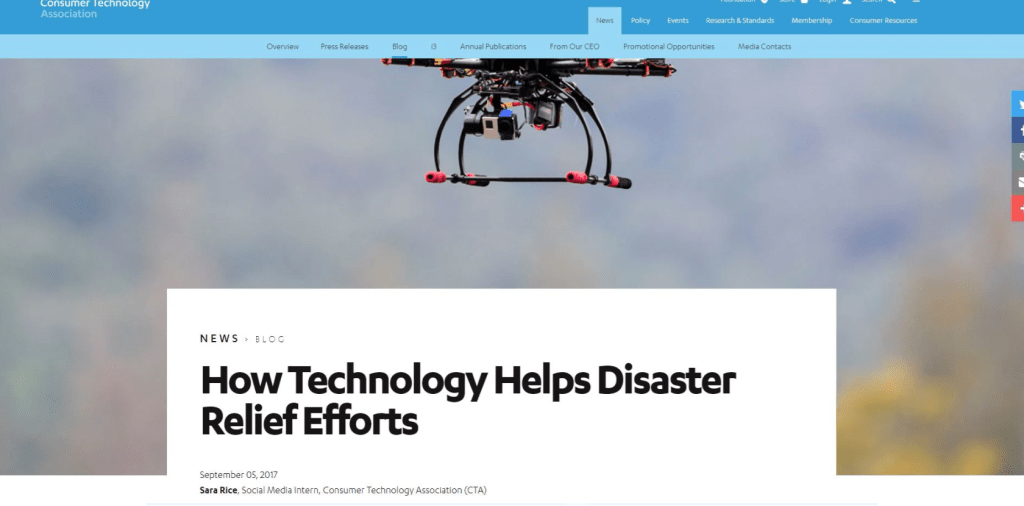
The devastation that comes in the wake of a natural disaster can be shattering. As technology has advanced, it is being used in many disaster relief efforts and emergency management systems, including the relief efforts happening right now in Texas.
Many cities and municipalities have implemented the same technology used in smart cities, such as connected sensors, that can monitor levees or other flood management systems. In the Houston area, gauges were installed that transmit data from the county’s bayou system. Many residents were able to check online to see the status of these gauges to know when and where the water was rising.
Drones are being used more and more to survey areas that first responders can’t get to and provide real time imagery to conditions on the ground. After Hurricane Harvey, drones have been deployed by utility companies to inspect cell towers and by insurance companies to monitor property damage.
Local and national agencies are relying on new technology to help create faster responses to disasters. FEMA has an app that publishes important information about disaster preparedness. Agencies and first responders also monitored social media to gather information directly from people about where aid was needed.
September 25, 2017, Sara Rice, Social Media, Consumer Technology Association (CTA)
Many of today’s cities and metropolitan areas are turning to technology to upgrade infrastructure and to make city functions more efficient. Internet of Things, 5G, data analytics, self-driving vehicles and artificial intelligence are just some of the technologies local governments are using to build the cities of tomorrow.
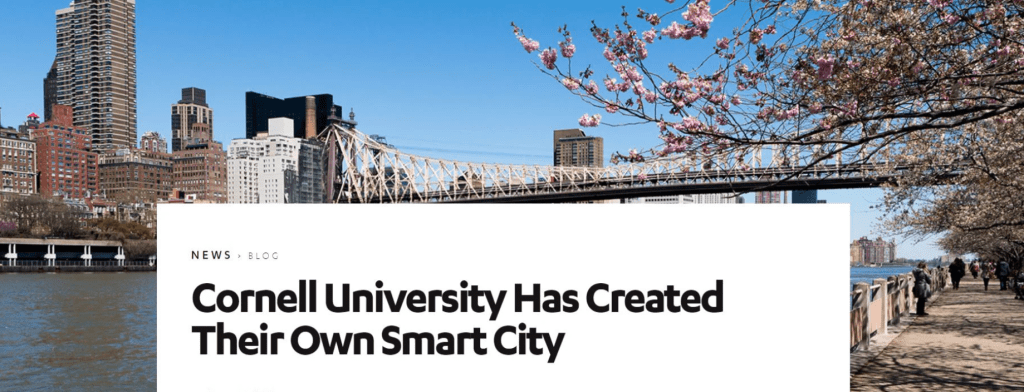
But it’s not just cities that are using this technology. Cornell University has designed a campus for the 21st century that is a model for innovative urban design. Located on Roosevelt Island, which sits in the East River that separates Manhattan and Queens, Cornell Tech is an urban campus that shows what the future of city planning and urban design could look like with a focus on innovation.
The campus features energy efficient buildings, office space for startups, open spaces designed for collaboration, environmentally friendly public outdoor areas and is completely car-free. Check out the video below to see what the campus looks like.
 Sara Rice